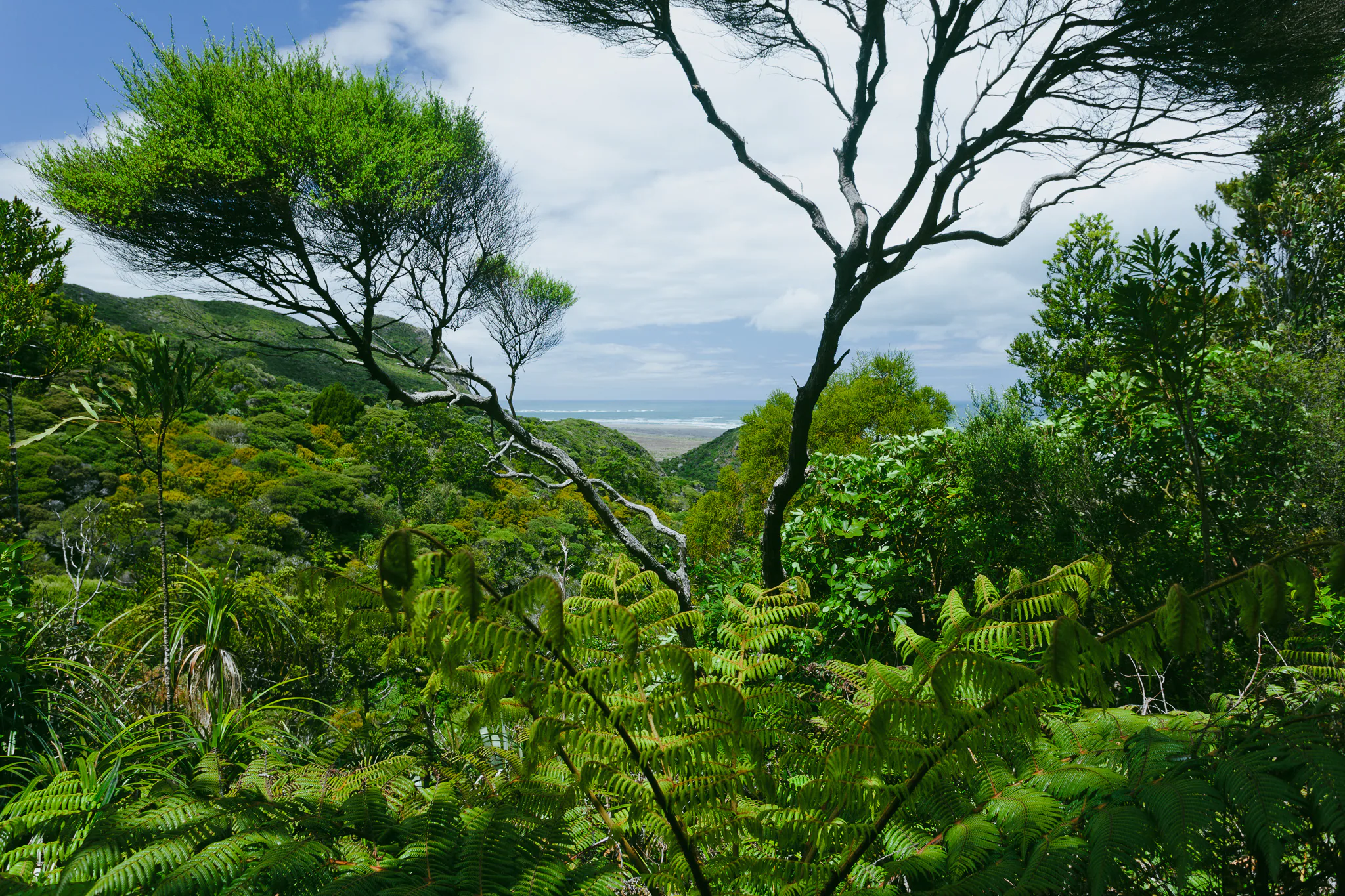
Toetoe
Toetoe has long, slender leaves that form large tufts or clumps. The leaves are green in colour and have a distinctive arching shape.

What to know before you plant
The essentials — how big it gets, how fast it grows, and where it sits in the forest.
Mature height (m)
Mature spread (m)
Successional stage
Form
Description
Toetoe, scientifically known as Cortaderia spp., is a group of native grasses that are commonly found in New Zealand. These tall and graceful plants have long, slender leaves that form large tufts or clumps. The leaves are green in colour and have a distinctive arching shape. Toetoe plants can reach impressive heights, with some species growing up to three meters tall.
Habitat
Toetoe grasses thrive in a variety of habitats throughout New Zealand, including coastal areas, wetlands, sand dunes, and grasslands. They are well adapted to withstand coastal winds and can tolerate a range of soil conditions. Toetoe plays a vital role in stabilising dunes and preventing erosion, as their extensive root systems help anchor the soil.
Cultural Importance
Toetoe holds significant cultural importance for Māori, the indigenous people of New Zealand. It is often used in traditional weaving, crafts, and construction of shelter. The long, flexible leaves of toetoe are used to create intricate baskets, mats, and roof thatching. The plant has cultural and spiritual significance, representing resilience and strength in Māori traditions.
Ecological Role
Toetoe grasses provide habitat and food for a variety of native birds, insects, and other wildlife. The dense tufts of leaves offer shelter and nesting sites for birds, such as pīwakawaka (fantail) and korimako (bellbird). The plant's seeds are an important food source for native birds. Toetoe also contributes to soil stabilisation and assists in the restoration of disturbed areas.
Associated Birds
Toetoe can provide cover and nesting sites for a variety of native birds, including ground-nesting species such as the New Zealand Pipit (Anthus novaeseelandiae). These birds may utilise the dense growth of the Toetoe as a sheltered nesting area or for foraging for insects and other small invertebrates among the grass blades.
Conservation Status
Toetoe is not considered a threatened species. However, like other native flora, it can be impacted by habitat loss, invasive species, and land-use changes. Conservation efforts focus on protecting and restoring natural habitats where toetoe thrives, as well as raising awareness about its ecological importance.
Interesting Facts:
- Toetoe is known for its graceful appearance, often swaying in the wind and creating a beautiful visual display in the landscape.
- The plant produces large, feathery plumes or seed heads that appear in late summer and provide an attractive ornamental feature.
- Toetoe grasses are resilient and can regenerate quickly after fire or disturbance, helping to restore damaged ecosystems.
- Māori traditionally used toetoe leaves for thatching roofs and creating walls for their homes, known as whare.
- Toetoe grasses have deep root systems that aid in soil erosion control and water retention.
Conservation Tips
To contribute to the conservation of toetoe and its associated ecosystems, support local restoration projects that focus on preserving coastal areas and wetlands. Participate in community initiatives to remove invasive plant species that threaten native habitats. Learn about the cultural significance of toetoe and other native plants and share this knowledge to promote their conservation. Avoid illegal collection or harvesting of toetoe from protected areas, and appreciate the plant's beauty in its natural habitat.
Growing conditions
Moisture
Soil
Drainage
Frost tolerance
Wind tolerance
Coastal tolerance
What this tree gives back

Food for native birds
Fruit, seeds or nectar that feed native birds.

Supports pollinators
Flowers that sustain native bees and insects.
Erosion control
Roots that bind soil and hold slopes together.
Suits riparian planting
Thrives along stream and river margins.
Suits wetland planting
Handles the wet ground of wetland sites.
More native trees
Explore other species

Ready to plant natives?
Assess your land and discover the right planting approach for your forest.