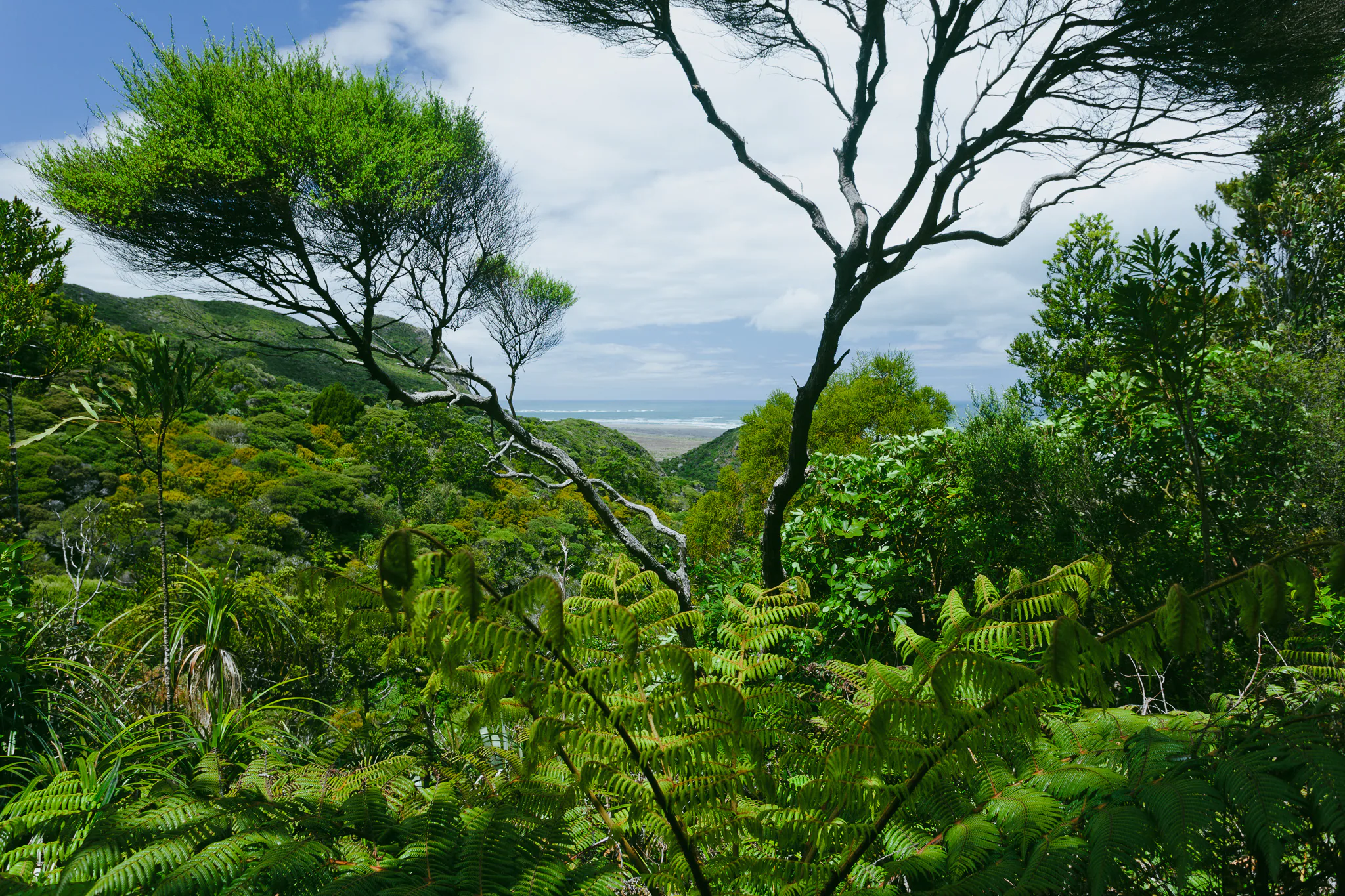
Five Finger
Five finger, also known as whauwhaupaku, is a fast-growing evergreen native shrub or small tree that typically reaches 5–8 metres tall.
What to know before you plant
The essentials — how big it gets, how fast it grows, and where it sits in the forest.
Mature height (m)
Mature spread (m)
Growth rate
Successional stage
Form
Mature DBH (cm)
Description
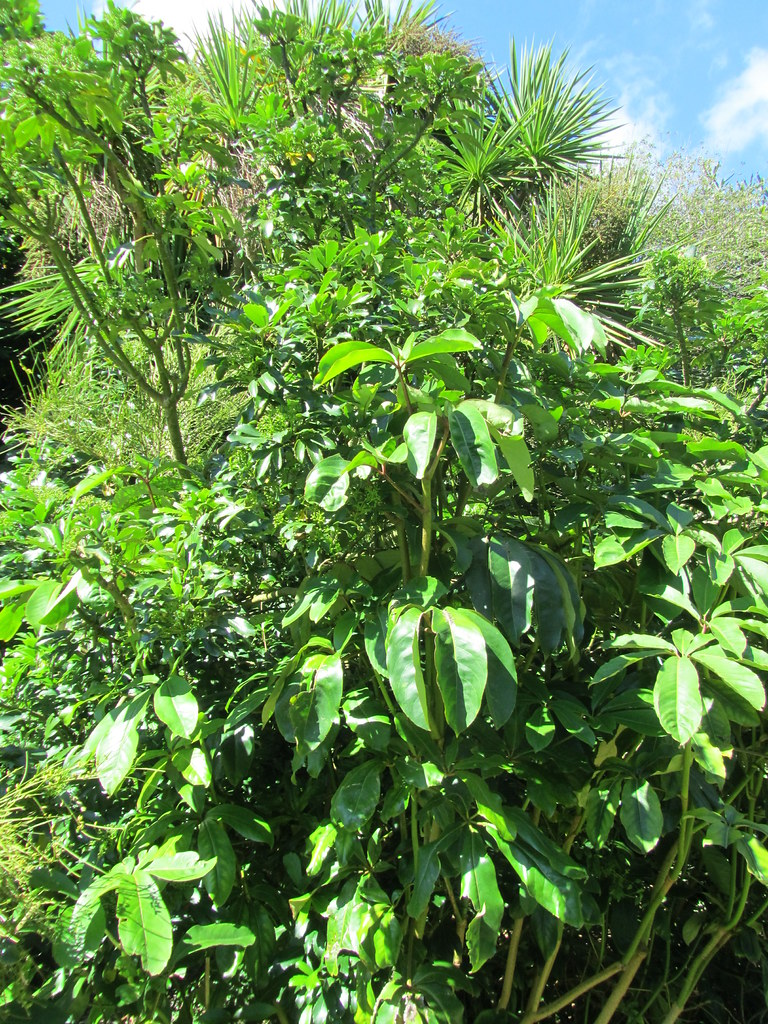
Five finger (Pseudopanax arboreus), also known as whauwhaupaku, is a fast-growing evergreen native shrub or small tree that typically reaches 5–8 metres tall, although it can occasionally grow taller. Its distinctive leaves are divided into five to seven broad, glossy leaflets that spread from a central point like the fingers of a hand, giving the plant its common name. Five finger produces branching clusters of small greenish flowers, followed by small, rounded fleshy fruits that ripen to dark purple or almost black. The fruit is readily used by native birds, making five finger a valuable wildlife tree.
Habitat
Five finger is endemic to New Zealand and is widespread throughout the North Island, South Island and Rakiura/Stewart Island. It occurs from coastal and lowland environments into montane forest and is particularly common in forest margins, shrublands, stream margins, gullies and regenerating native vegetation. Five finger grows well in moist, reasonably fertile soils and can tolerate both sun and partial shade. Its relatively rapid growth and ability to establish following disturbance make it common in secondary forest and regenerating sites.
Cultural Importance
Five finger, or whauwhaupaku, is a familiar component of native forest and has a history of recognition and use within mātauranga Māori. The plant has been associated with traditional medicinal uses, while its relatively soft wood and other plant material had practical applications. Today, five finger is widely valued as a restoration species because it grows quickly, provides shelter and produces fruit that attracts native birds.
Ecological Role
Five finger is an important early-successional, understorey and subcanopy species. Its rapid growth helps create shelter and shade in regenerating vegetation, improving conditions for other native forest plants. Its flowers provide nectar and pollen for insects, while its abundant fleshy fruits are an important seasonal food for native birds. Birds that consume the fruit disperse its seeds through the surrounding landscape, allowing five finger to establish naturally in forest gaps, margins and regenerating areas. Its dense foliage also provides shelter and supports a variety of invertebrates.
Associated Birds
Kererū: Kererū feed on the fleshy fruits of five finger and are important seed dispersers in native forest. They can swallow the fruit and later deposit seeds away from the parent tree, helping five finger spread through forest gaps and regenerating vegetation.
Tūī: Tūī feed on five finger fruit and also visit its flowers and foliage while searching for nectar and insects. Fruiting trees provide a useful seasonal food resource, while tūī movements between plants can contribute to seed dispersal.
Korimako/Bellbird: Korimako use five finger for both fruit and other food resources. They can consume the small ripe fruits and forage around flowering branches for nectar and insects. Their movements through native vegetation can help distribute seeds away from fruiting trees.
Tauhou/Silvereye: Tauhou readily consume the small fleshy fruits produced by five finger. They also search among its dense foliage for insects and other invertebrates. Because tauhou frequently move through forest margins, gardens and regenerating vegetation, they can help spread seeds between patches of suitable habitat.
Kākā: Kākā have a varied diet that includes native fruits, nectar, seeds and invertebrates. Five finger can provide fruit and other feeding opportunities where the two occur together, while stands of mature and regenerating native vegetation containing five finger contribute to the diverse forest habitat used by kākā.
Conservation Status
Five finger is classified as Not Threatened in New Zealand and remains widespread across its natural range. However, it is highly palatable to introduced browsing mammals, particularly brushtail possums, which can heavily browse foliage and damage mature plants. Deer and other browsing animals can also suppress seedlings and regeneration. Effective pest control can therefore substantially improve the health and abundance of five finger in native forest.
Interesting Facts
- Five finger is endemic to New Zealand, occurring naturally nowhere else in the world.
- Its Māori name is whauwhaupaku.
- Despite its common name, the leaves do not always have exactly five leaflets; they commonly have five to seven.
- Five finger belongs to the Araliaceae family, which also includes patē and lancewood.
- Its small fleshy fruits ripen to dark purple or almost black and are eaten by native birds.
- Five finger is relatively fast-growing and commonly appears in regenerating forest and disturbed areas.
- It can grow from coastal environments into montane forest.
- The species is particularly palatable to possums, making browsing control important in some forests.
- Its combination of fast growth, dense foliage and bird-attracting fruit makes it useful in ecological restoration.
Conservation Tips
Five finger is particularly useful for establishing shelter and wildlife habitat in native restoration projects. It can be planted on forest margins, beside streams and within regenerating areas alongside other locally appropriate pioneer and fruiting species. Controlling possums and other browsing mammals is important because repeated browsing can severely damage foliage and suppress regeneration. Planting a diverse mixture of native fruiting species alongside five finger can provide birds with food across different seasons while encouraging natural seed dispersal and the development of a more complex native forest.
Growing conditions
Sun
Moisture
Soil
Drainage
Frost tolerance
Wind tolerance
Coastal tolerance
What this tree gives back

Food for native birds
Fruit, seeds or nectar that feed native birds.
Supports pollinators
Flowers that sustain native bees and insects.
Erosion control
Roots that bind soil and hold slopes together.
Suits riparian planting
Thrives along stream and river margins.

Suits wetland planting
Handles the wet ground of wetland sites.
More native trees
Explore other species

Ready to plant natives?
Assess your land and discover the right planting approach for your forest.