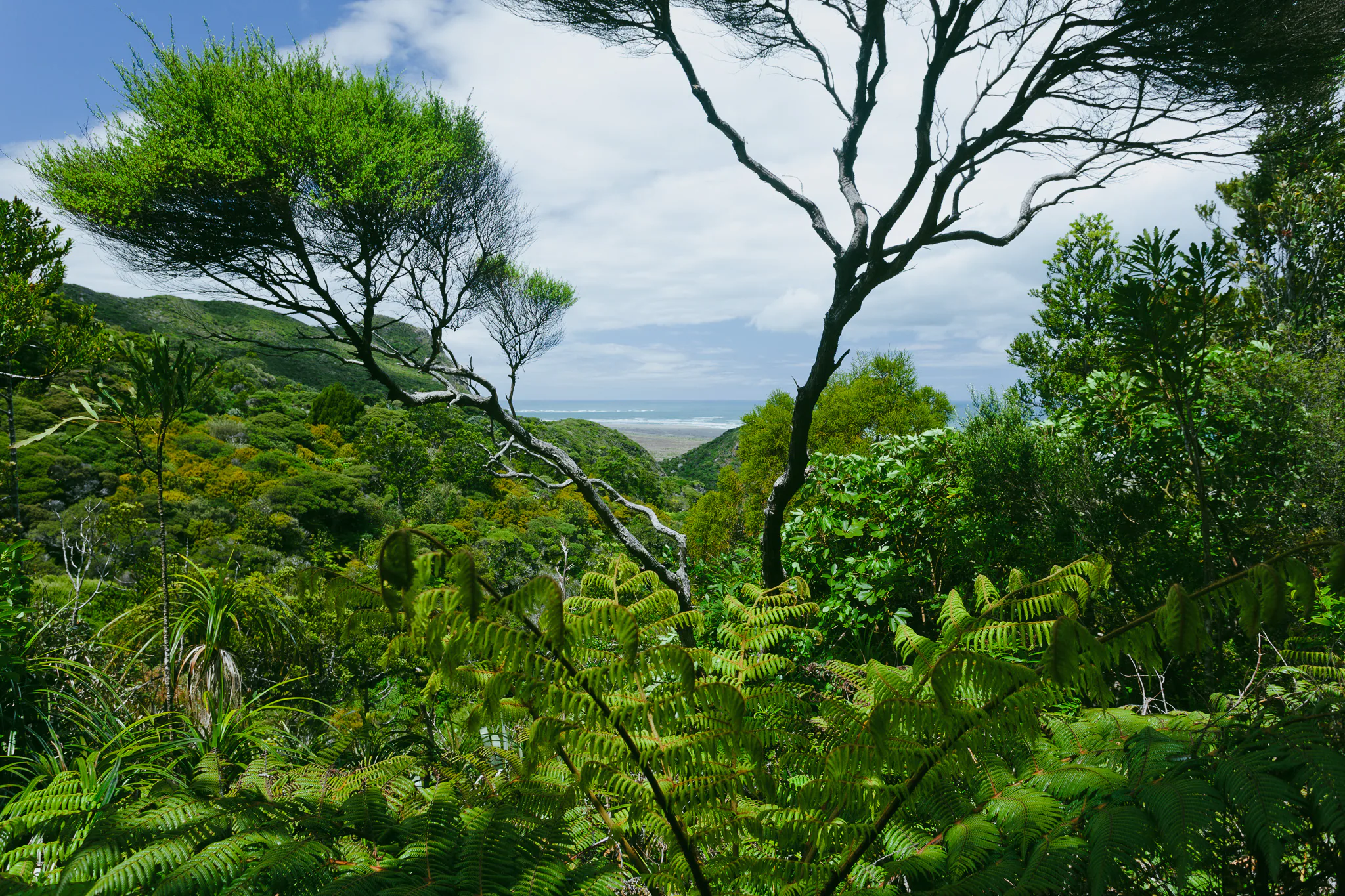
Hīnau
Hīnau is a large evergreen native tree that can grow around 15–20 metres tall, occasionally becoming larger in mature forest
What to know before you plant
The essentials — how big it gets, how fast it grows, and where it sits in the forest.
Mature height (m)
Mature spread (m)
Growth rate
Successional stage
Form
Mature DBH (cm)
Description
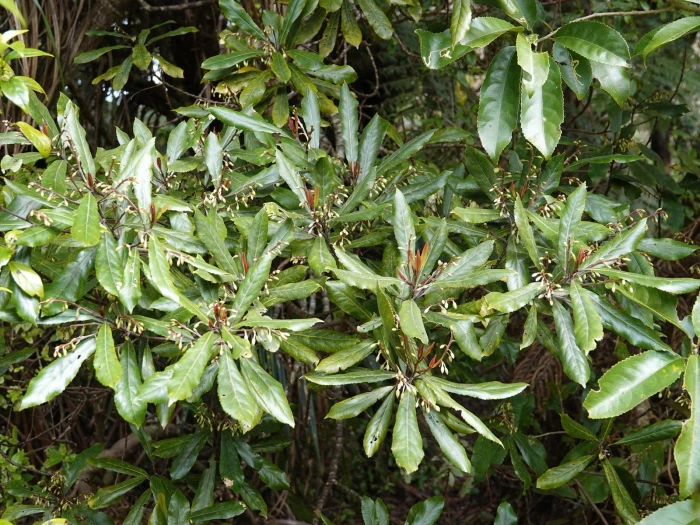
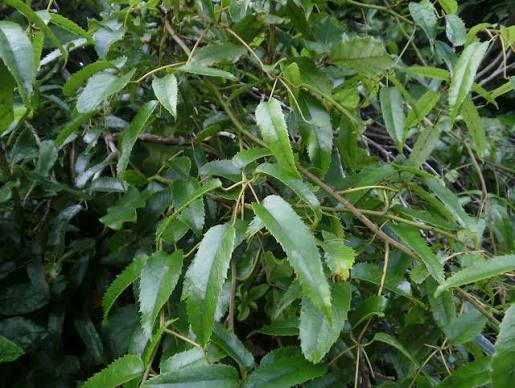
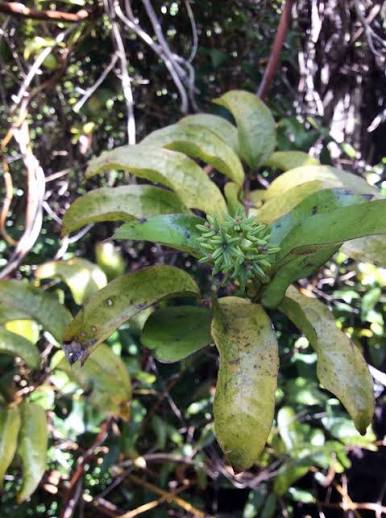
Hīnau (Elaeocarpus dentatus) is a large evergreen native tree that can grow around 15–20 metres tall, occasionally becoming larger in mature forest. It develops a broad crown and has dark green, leathery leaves with toothed margins. Older leaves often turn striking shades of red or orange before falling. During spring and early summer, hīnau produces hanging clusters of small white flowers with delicately fringed petals. These are followed by oval, fleshy fruits that ripen to dark purple or almost black and contain a hard stone enclosing the seed.
Habitat
Hīnau is endemic to New Zealand and occurs naturally throughout the North Island, South Island and Rakiura/Stewart Island. It is primarily a lowland and montane forest tree and grows in a variety of forest types, including mixed podocarp-broadleaf and beech forests. Hīnau generally favours moist, well-drained soils and sheltered forest environments but can occur across a relatively broad range of conditions. Mature trees commonly form part of the canopy or subcanopy and can persist for many years within established native forest.
Cultural Importance
Hīnau has considerable importance in mātauranga Māori, particularly as a traditional food source. The flesh of ripe fruit is relatively thin, but the kernels could be processed to produce food, including a type of meal used to make cakes or other preparations. Considerable preparation was required to make the kernels suitable for eating. The bark was also valued as a source of dark dye and was used in traditional practices including colouring fibres. Hīnau therefore provided both food and useful materials within the ngahere.
Ecological Role
Hīnau is an important canopy and subcanopy tree that contributes both structure and food to native forest ecosystems. Its flowers provide resources for insects and other pollinators, while its dark fleshy fruits are eaten by native birds. These birds play an important role in dispersing hīnau seeds away from parent trees. Mature hīnau also provide shelter, perching habitat and extensive surfaces for mosses, lichens and other forest organisms. Fallen fruit and leaf litter contribute organic material to the forest floor.
Associated Birds
Kererū: Kererū are important consumers and dispersers of hīnau fruit. Their ability to swallow relatively large native fruits allows them to consume the fleshy drupes and transport the hard stones away from the parent tree. This makes kererū valuable contributors to the natural regeneration and movement of hīnau through native forest.
Kōkako: Kōkako feed on a diverse range of native leaves, flowers and fruits, including seasonal forest fruits. Within forests where hīnau occurs alongside kōkako populations, fruiting trees contribute to the diversity of food available to these large native songbirds and to the complexity of mature forest habitat.
Tūī: Tūī have a varied diet of nectar, fruit and insects and can use fruiting hīnau as part of the seasonal food supply within native forest. They also forage among the flowers and foliage for insects and other resources while moving through the canopy.
Kākā: Kākā forage widely through mature native forest for fruit, seeds, nectar and invertebrates. Hīnau contributes seasonal fruit and seed resources as well as the mature forest structure in which kākā search trunks, branches and decaying wood for invertebrate prey.
Conservation Status
Hīnau is classified as Not Threatened in New Zealand and remains widespread within its natural range. However, successful regeneration depends partly on maintaining healthy forest ecosystems and native seed-dispersing birds. Introduced browsing animals, seed predators, forest fragmentation and the loss of large native birds can interfere with natural regeneration even where mature hīnau trees remain common.
Interesting Facts
- Hīnau is endemic to New Zealand, meaning it occurs naturally nowhere else in the world.
- Its white flowers have finely divided, fringed petals that give them a delicate appearance.
- The fruits mature to dark purple or almost black and contain a very hard stone.
- Hīnau fruit and kernels were traditionally processed by Māori as a food source.
- Its bark can produce a dark dye and was traditionally used for colouring materials.
- Older hīnau leaves frequently turn bright red or orange before falling, even though the tree remains evergreen.
- Kererū are important dispersers of hīnau because they can consume its fleshy fruit and transport the enclosed stones through the forest.
- Hīnau belongs to the same botanical family as pōkākā and other Elaeocarpus species.
Conservation Tips
Protecting mature native forest and its bird populations is important for maintaining hīnau and its natural regeneration processes. Predator control supports kererū and other native birds that disperse forest seeds, while controlling browsing animals protects seedlings and young trees. Hīnau is valuable in restoration projects where long-term development of a diverse native canopy is the goal. Planting it alongside a variety of locally appropriate fruiting trees can provide food for birds while encouraging natural seed movement and increasingly complex forest regeneration.
Growing conditions
Sun
Moisture
Soil
Drainage
Frost tolerance
Wind tolerance
Coastal tolerance
What this tree gives back

Food for native birds
Fruit, seeds or nectar that feed native birds.
Supports pollinators
Flowers that sustain native bees and insects.
Erosion control
Roots that bind soil and hold slopes together.
Suits riparian planting
Thrives along stream and river margins.

Suits wetland planting
Handles the wet ground of wetland sites.
More native trees
Explore other species

Ready to plant natives?
Assess your land and discover the right planting approach for your forest.