Kiokio
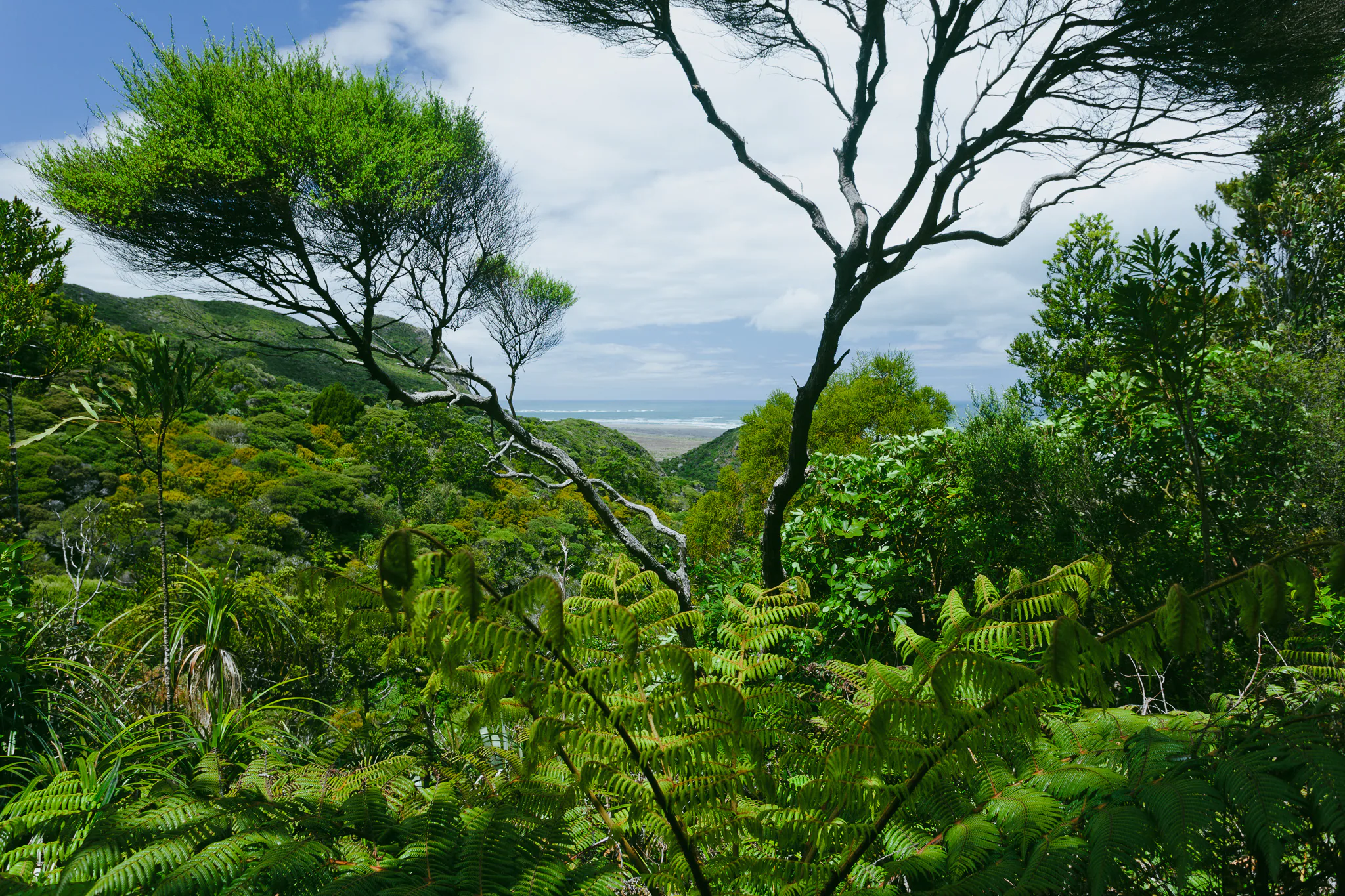
Kiokio is a large, robust native fern with long, arching fronds that grow from creeping rhizomes.

What to know before you plant
The essentials — how big it gets, how fast it grows, and where it sits in the forest.
Mature height (m)
Growth rate
Successional stage
Form
Description
Kiokio (Parablechnum novae-zelandiae) is a large, robust native fern with long, arching fronds that commonly reach 1–2 metres in length. The fronds arise from creeping rhizomes and form spreading colonies rather than a tall trunk. Mature fronds are dark green and leathery, with numerous narrow, finely toothed leaflets arranged along a central stalk. New fronds are particularly distinctive, often emerging in shades of pink, bronze or reddish-brown before becoming green. Like other ferns, kiokio does not produce flowers, fruit or seeds; it reproduces through spores produced on fertile fronds.
Habitat
Kiokio is endemic to New Zealand and is widespread from the Kermadec Islands through the North Island and South Island to Rakiura/Stewart Island and the Chatham Islands. It occurs from coastal areas into montane environments and is especially common in moist, high-rainfall regions. Kiokio grows along streams and rivers, forest margins, damp banks, ravines, wetlands, swamp margins and shaded cliffs. It also readily colonises disturbed, moisture-retentive ground such as slips, tracksides and roadside banks.
Cultural Importance
Kiokio has a long history of use within mātauranga Māori. Young, tightly curled fern shoots were traditionally eaten after appropriate preparation, while mature fronds were useful for wrapping, covering and protecting food, including during cooking in hāngī. The plant has several recorded Māori names, reflecting its familiarity and widespread occurrence within the ngahere. Its dense growth and distinctive colourful new fronds also make it a recognisable feature of damp native forest and wetland margins.
Ecological Role
Kiokio is an important ground-layer and lower-understorey species in moist native ecosystems. Its spreading rhizomes and dense fronds cover exposed soil, helping reduce erosion and protect damp ground from direct sunlight and heavy rainfall. Kiokio can establish rapidly after disturbance, helping restore vegetation cover on slips, banks and forest margins. Its dense foliage creates humid, sheltered microhabitats for insects, spiders and other small organisms and provides cover within the lower levels of native forest.
Associated Birds
Riroriro/Grey Warbler: Riroriro primarily benefit from kiokio indirectly. The dense fern foliage supports insects, spiders and other small invertebrates that form the majority of their diet. In forest environments, riroriro may forage through and around fern-rich understorey while searching for prey.
Pīwakawaka/Fantail: Pīwakawaka feed almost entirely on insects and can forage around dense stands of kiokio where small flying insects are abundant. The fern's humid foliage and sheltered growing conditions help support the invertebrate communities on which fantails depend.
Miromiro/Tomtit: Where their ranges overlap, miromiro forage close to the ground and within forest understorey for insects and other small invertebrates. Kiokio contributes to the structurally complex, insect-rich lower vegetation used by these birds rather than providing fruit or nectar directly.
Mātātā/Fernbird: In wetland and dense scrub environments where kiokio forms part of the vegetation, mātātā can benefit from the low, tangled cover and associated invertebrate life. Fernbirds depend heavily on dense vegetation close to the ground for shelter and foraging.
Conservation Status
Kiokio is classified as Not Threatened in New Zealand and remains widespread and locally abundant. Its ability to spread through rhizomes and colonise disturbed ground makes it relatively resilient. However, local populations can still be affected by wetland drainage, clearance of riparian vegetation, trampling, browsing and competition from invasive plants.
Interesting Facts
- Kiokio is endemic to New Zealand, occurring naturally nowhere else in the world.
- Its new fronds can emerge in striking shades of pink, red, bronze or copper before turning green.
- Kiokio spreads through creeping underground or surface rhizomes and can form extensive colonies.
- It produces spores rather than flowers, fruit or seeds.
- Fertile and sterile fronds can differ in appearance, with fertile fronds carrying the structures responsible for producing spores.
- Kiokio can grow from coastal environments into montane areas.
- It is particularly characteristic of damp banks, streamsides, wet forest margins and other moisture-rich habitats.
- Its dense root and rhizome system helps protect exposed soil and makes it useful for revegetating damp slopes and banks.
- Kiokio can respond rapidly to disturbance and is often conspicuous on slips and other newly exposed sites.
Conservation Tips
Protecting damp forest margins, streams, wetlands and riparian vegetation helps maintain healthy kiokio populations and the many small organisms associated with them. In restoration projects, kiokio is particularly useful for moist banks, stream margins and partially shaded areas where dense ground cover is required. Controlling invasive weeds and preventing livestock access to waterways will help protect existing colonies. Combining kiokio with native trees, shrubs, sedges and other ferns can create a layered, humid understorey that provides valuable habitat for native invertebrates and birds.
Growing conditions
Sun
Moisture
Soil
Drainage
Frost tolerance
Wind tolerance
Coastal tolerance
What this tree gives back

Food for native birds
Fruit, seeds or nectar that feed native birds.
Supports pollinators
Flowers that sustain native bees and insects.

Erosion control
Roots that bind soil and hold slopes together.
Suits riparian planting
Thrives along stream and river margins.
Suits wetland planting
Handles the wet ground of wetland sites.
More native trees
Explore other species
Ready to plant natives?
Assess your land and discover the right planting approach for your forest.