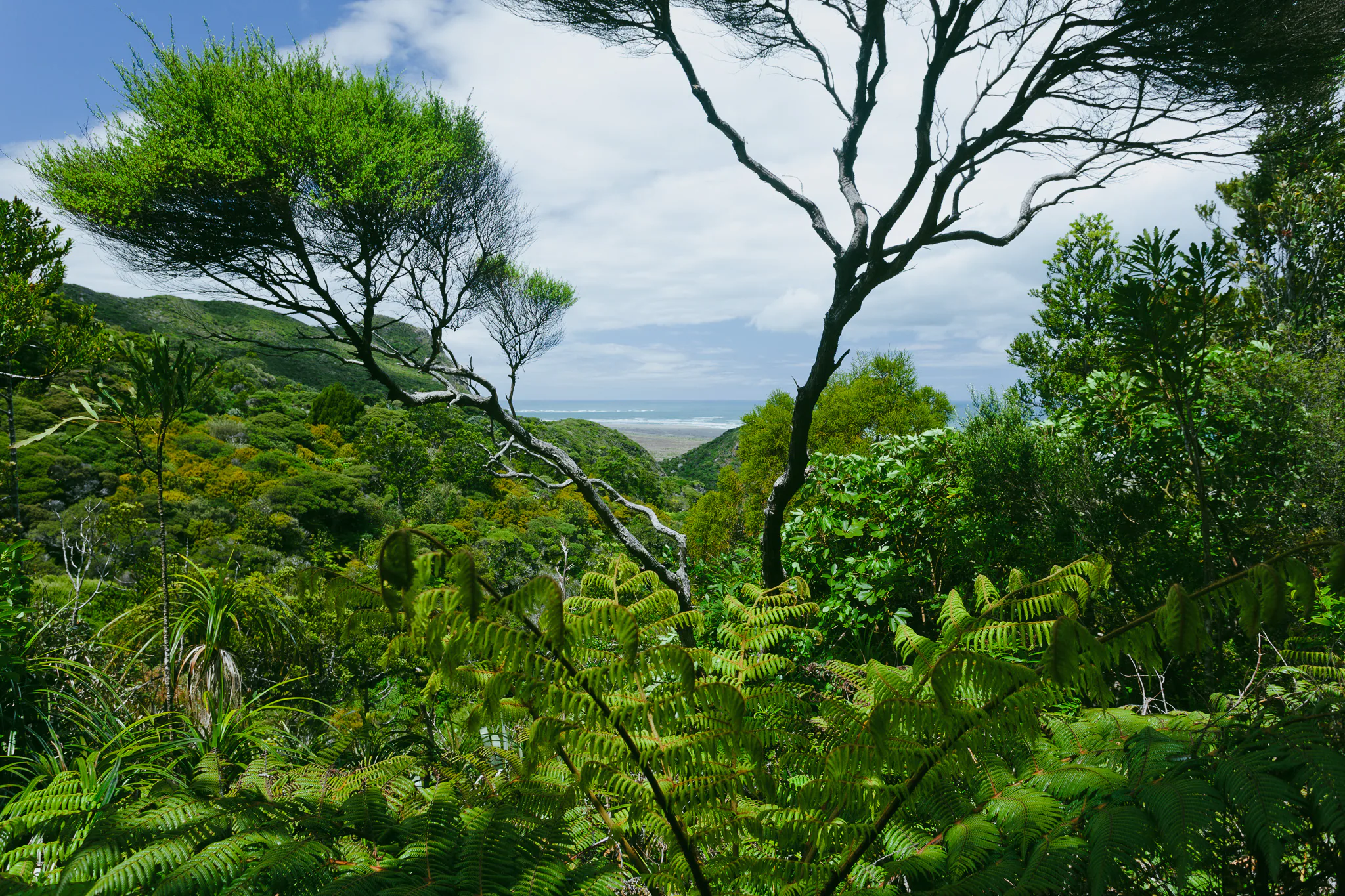
Mountain tōtara
Mountain tōtara, also known as Hall's tōtara, is a native evergreen conifer that typically grows as a medium-sized forest tree up to around 20 metres tall.
What to know before you plant
The essentials — how big it gets, how fast it grows, and where it sits in the forest.
Mature height (m)
Mature spread (m)
Growth rate
Successional stage
Form
Mature DBH (cm)
Description
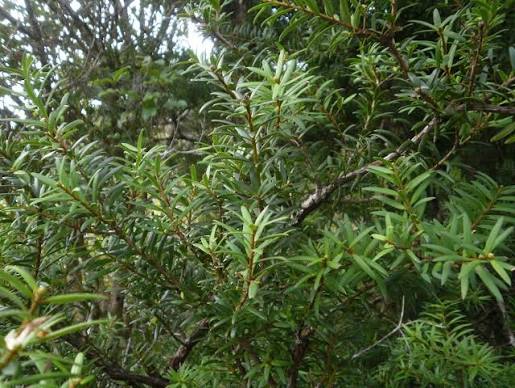
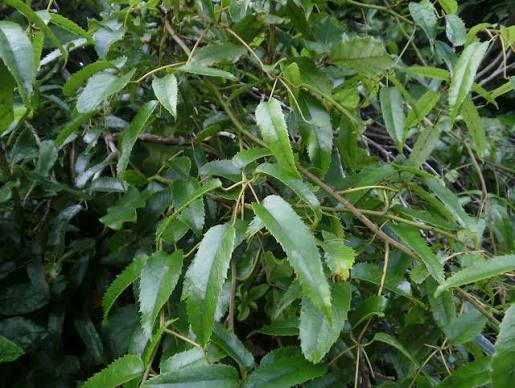
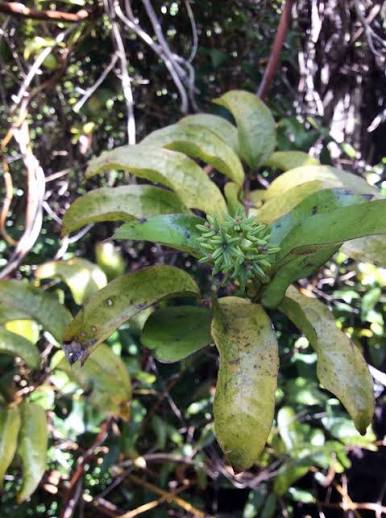
Mountain tōtara (Podocarpus laetus), also known as Hall's tōtara, is a native evergreen conifer that typically grows as a medium-sized forest tree up to around 20 metres tall. In exposed montane environments it can remain considerably smaller and develop a compact, wind-shaped form. It has thick, leathery, dark green leaves that are broader than those of the more familiar lowland tōtara. The bark is reddish-brown to grey-brown and peels away in thin, papery flakes and strips. Rather than producing flowers or cones in the familiar sense, female trees develop seeds on fleshy, berry-like red receptacles that attract native birds.
Habitat
Mountain tōtara is endemic to New Zealand and occurs naturally across the North Island, South Island and Rakiura/Stewart Island. As its common name suggests, it is particularly characteristic of montane and subalpine forests, although it can also occur at lower elevations. It grows in cool, high-rainfall environments and is tolerant of frost, wind and exposed conditions. Mountain tōtara is frequently found in upland forest alongside native beeches and other cold-tolerant species, and at higher elevations it can become shorter and more compact as conditions become increasingly harsh.
Cultural Importance
Mountain tōtara belongs to the same group of native conifers as the larger lowland tōtara and shares the strong cultural significance associated with tōtara in te ao Māori. Tōtara timber was traditionally valued for its durability and workability and was used for important structures and objects, including waka, whare and carvings. Mountain tōtara is generally smaller than lowland tōtara, but remains an important component of the indigenous forests and landscapes of Aotearoa.
Ecological Role
Mountain tōtara is an important canopy and subcanopy tree in cool montane forests. Its evergreen foliage provides year-round structure, shelter and habitat for native birds, insects and other forest organisms. Mature trees contribute to the complex architecture of old native forest, while their trunks and branches can support mosses, lichens and epiphytes. Female trees produce fleshy red receptacles that provide food for native fruit-eating birds. These birds disperse the seeds after feeding, helping mountain tōtara regenerate and spread through suitable forest habitat.
Associated Birds
Kererū: Kererū are major fruit-eating birds and seed dispersers in New Zealand forests. They feed on a wide range of native fruits and can consume the fleshy reproductive structures of mountain tōtara. By carrying and passing seeds away from the parent tree, kererū contribute to the regeneration and dispersal of native forest plants.
Tūī: Tūī have a varied diet of fruit, nectar and insects. They can feed on the fleshy red receptacles produced by female mountain tōtara and also forage among its branches for insects and other invertebrates. Their movements between fruiting trees can contribute to seed dispersal within native forest.
Korimako/Bellbird: Korimako feed on fruit, nectar and invertebrates and forage extensively through native forest vegetation. The fleshy reproductive structures of mountain tōtara can provide a seasonal food source, while its evergreen canopy provides habitat in which korimako can forage and shelter.
Tauhou/Silvereye: Tauhou are small, active birds that consume fruit, nectar and insects. They can make use of small fleshy fruits and reproductive structures produced by native forest plants, while the dense foliage of mountain tōtara provides opportunities to forage for insects and other small invertebrates.
Conservation Status
Mountain tōtara is classified as Not Threatened in New Zealand. It remains widespread across much of its natural range and is an important component of many montane forests. Although the species itself is not considered threatened, populations can be affected by browsing animals, habitat modification and the loss or degradation of native forest.
Interesting Facts
- Mountain tōtara is endemic to New Zealand, meaning it occurs naturally nowhere else in the world.
- It is closely related to lowland tōtara (Podocarpus totara) but is generally associated with cooler and higher-elevation environments.
- Mountain tōtara can grow to around 20 metres tall in sheltered forest but may remain a much smaller, compact tree in exposed subalpine environments.
- Its leaves are generally broader, thicker and more leathery than those of lowland tōtara.
- Its reddish-brown bark naturally peels away in thin flakes and strips.
- Mountain tōtara is a conifer, so it does not produce true berries. The berry-like structures eaten by birds are fleshy receptacles associated with its seeds.
- Older mountain tōtara can form part of long-lived montane forest communities and provide habitat for mosses, lichens and epiphytes.
Conservation Tips
Protecting montane and subalpine native forests is important for maintaining healthy mountain tōtara populations and the diverse wildlife these forests support. Controlling introduced browsing animals helps protect seedlings and young trees and allows natural regeneration to occur. When restoring higher-elevation native vegetation within its natural range, mountain tōtara can provide a valuable long-lived component of the developing forest, particularly in cool sites exposed to frost and wind.
Growing conditions
Sun
Moisture
Soil
Drainage
Frost tolerance
Wind tolerance
Coastal tolerance
What this tree gives back

Food for native birds
Fruit, seeds or nectar that feed native birds.

Supports pollinators
Flowers that sustain native bees and insects.
Erosion control
Roots that bind soil and hold slopes together.
Suits riparian planting
Thrives along stream and river margins.
Suits wetland planting
Handles the wet ground of wetland sites.
More native trees
Explore other species

Ready to plant natives?
Assess your land and discover the right planting approach for your forest.