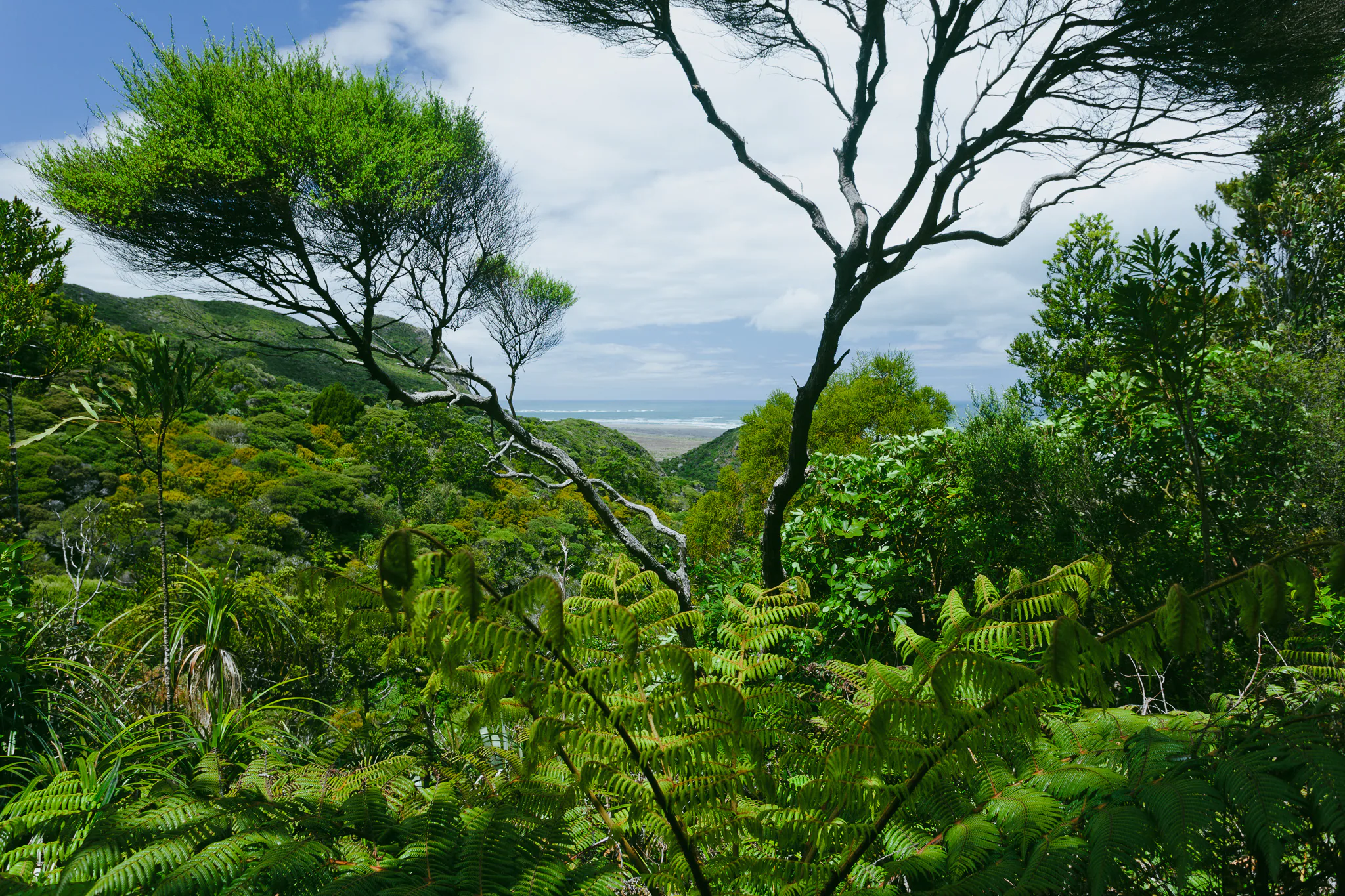
Tānekaha
Tānekaha, commonly known as celery pine, is an evergreen native conifer that can grow to around 20–25 metres tall.
What to know before you plant
The essentials — how big it gets, how fast it grows, and where it sits in the forest.
Mature height (m)
Mature spread (m)
Growth rate
Successional stage
Form
Mature DBH (cm)
Description
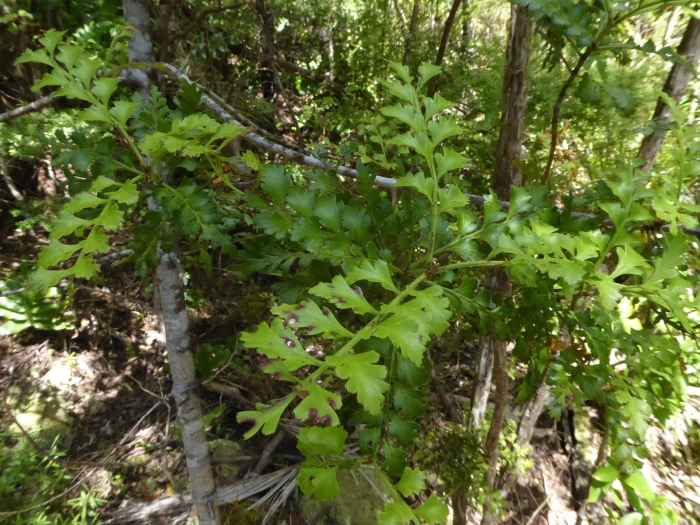
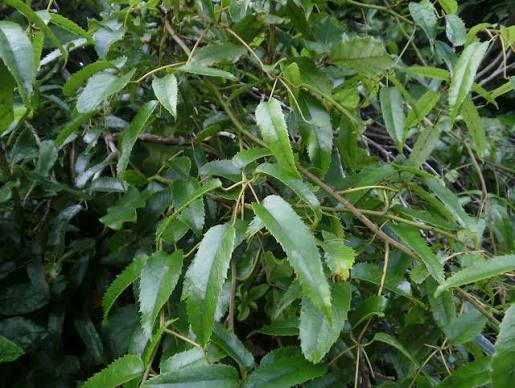
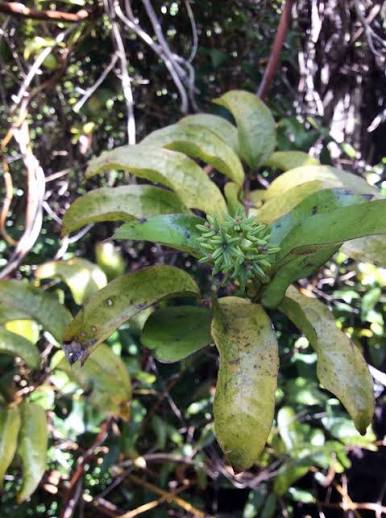
Tānekaha (Phyllocladus trichomanoides), commonly known as celery pine, is an evergreen native conifer that can grow to around 20–25 metres tall. Young trees often have a narrow, conical form, while mature trees develop a more spreading crown supported by a straight trunk. Tānekaha has an unusual appearance because the flattened, leathery structures that resemble leaves are actually modified stems called phylloclades. These are divided into lobes and resemble the leaves of celery, giving the tree its common English name. Tānekaha produces small reproductive cones rather than flowers, followed by small nut-like seeds surrounded by fleshy structures that become attractive to birds when mature.
Habitat
Tānekaha is endemic to New Zealand and occurs naturally in the North Island and northern parts of the South Island. It grows primarily in lowland and lower montane forests, particularly in northern and central areas. Tānekaha can occur on ridges, slopes and relatively infertile soils and is often found within mixed podocarp and broadleaf forest. It can tolerate comparatively dry and exposed sites once established and is capable of growing on soils where nutrient availability is relatively low.
Cultural Importance
Tānekaha has significant traditional importance to Māori. Its strong, pale timber was valued for construction and other practical uses, while the bark was an important source of reddish-brown tannins and dyes. Extracts from the bark were used to colour materials, including fibres used for weaving and other traditional crafts. Tānekaha timber was also valued by European settlers because of its strength, durability and resistance to wear and was used for purposes including flooring, railway sleepers and construction.
Ecological Role
Tānekaha is an important canopy and subcanopy species in northern native forests. Its evergreen crown provides year-round structure and shelter for birds, insects and other forest organisms. Mature trunks and branches also provide surfaces for mosses, lichens and epiphytes. The fleshy structures associated with its seeds provide a seasonal food resource for native birds, which can contribute to seed dispersal. As a long-lived forest tree capable of growing on relatively nutrient-poor soils, tānekaha contributes to the stability and diversity of mature native forest communities.
Associated Birds
Kererū: Kererū are important fruit-eating birds and seed dispersers in New Zealand forests. They consume the fleshy reproductive structures of many native trees, including podocarp and podocarp-like species such as tānekaha. By moving between fruiting trees and dispersing seeds away from the parent plant, kererū contribute to natural forest regeneration.
Tūī: Tūī feed on a varied diet of fruit, nectar and insects. When tānekaha is producing its fleshy reproductive structures, these can contribute to the seasonal food available to native birds. Tūī also forage among the tree's dense foliage for insects and other invertebrates.
Korimako/Bellbird: Korimako feed on fruit, nectar and insects throughout native forests. Tānekaha contributes to the diverse forest habitat in which these birds forage, and its fleshy seed-bearing structures can provide an additional seasonal food resource when mature.
Tauhou/Silvereye: Tauhou are small, active birds that feed on fruit, nectar and insects. They forage throughout native forest canopies and may make use of small fleshy reproductive structures as well as searching among tānekaha foliage for insects and other invertebrates.
Conservation Status
Tānekaha is classified as Not Threatened in New Zealand. It remains widespread within much of its natural range, although extensive historical forest clearance and timber harvesting reduced native forest habitat in many areas. Protecting remaining mature forests and encouraging natural regeneration helps maintain tānekaha populations and the ecological communities associated with them.
Interesting Facts
- Tānekaha is endemic to New Zealand, meaning it occurs naturally nowhere else in the world.
- Despite its common name "celery pine," tānekaha is not a true pine.
- What appear to be its leaves are actually flattened, leaf-like stems called phylloclades.
- The shape of its phylloclades resembles celery leaves, giving rise to the name celery pine.
- Tānekaha is a conifer, but its reproductive structures look very different from the large woody cones commonly associated with pine trees.
- Its bark contains tannins that were traditionally used by Māori to produce reddish-brown dyes.
- Tānekaha timber is strong, dense and durable and was historically valued for flooring, construction and other heavy-duty uses.
- Mature tānekaha can become substantial canopy trees and form a long-lived component of native forest.
Conservation Tips
Protecting lowland and montane native forests is important for maintaining healthy tānekaha populations and the wildlife these forests support. Controlling introduced browsing animals and invasive weeds helps seedlings establish and allows natural forest regeneration to continue. Tānekaha can also be incorporated into restoration planting within its natural range, particularly where the aim is to establish a diverse, long-lived native forest containing both broadleaf trees and indigenous conifers.
Growing conditions
Sun
Moisture
Soil
Drainage
Frost tolerance
Wind tolerance
Coastal tolerance
What this tree gives back

Food for native birds
Fruit, seeds or nectar that feed native birds.
Supports pollinators
Flowers that sustain native bees and insects.
Erosion control
Roots that bind soil and hold slopes together.
Suits riparian planting
Thrives along stream and river margins.

Suits wetland planting
Handles the wet ground of wetland sites.
More native trees
Explore other species

Ready to plant natives?
Assess your land and discover the right planting approach for your forest.