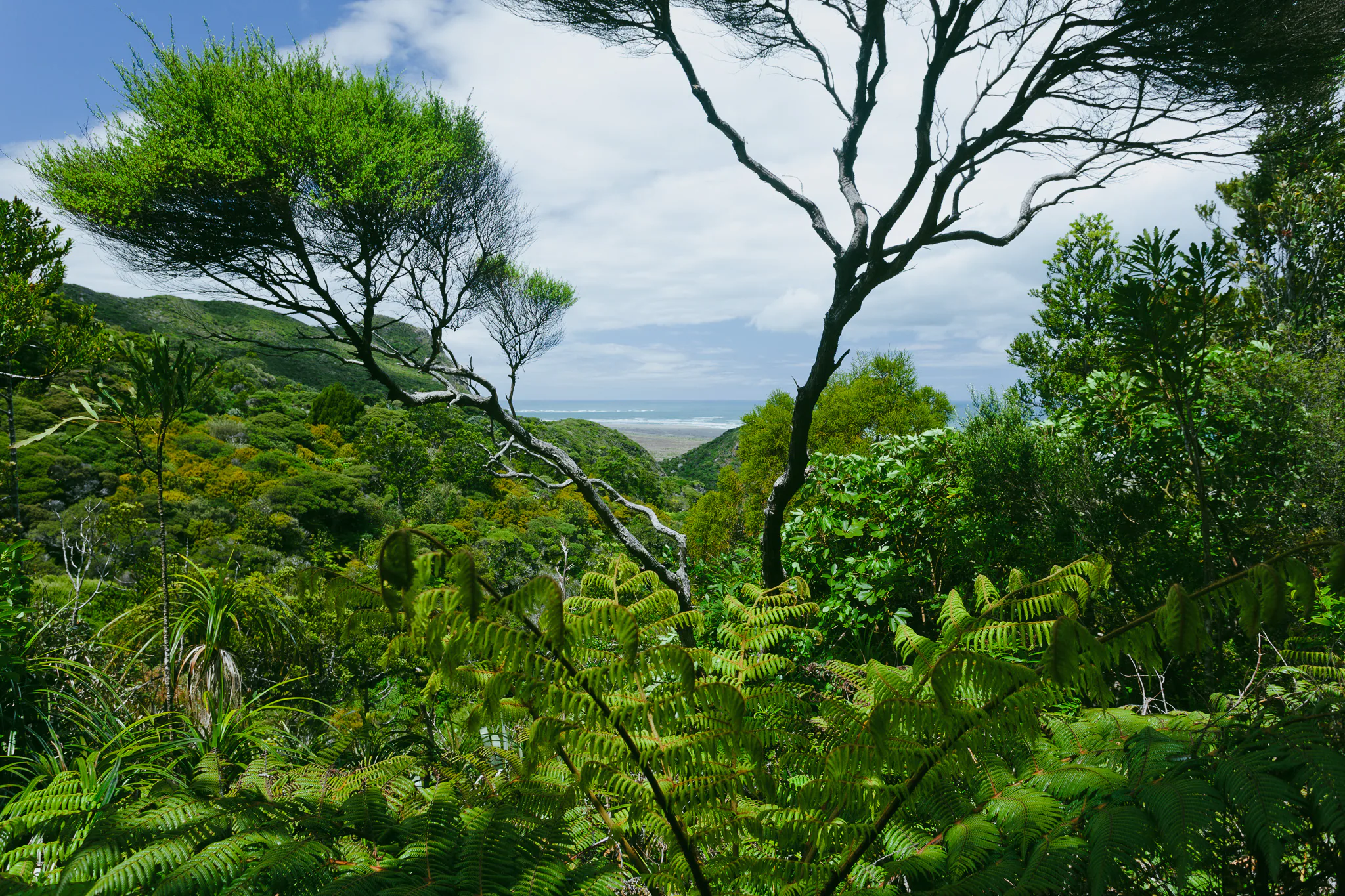
Wharariki
Wharariki , commonly known as mountain flax, is a large evergreen native plant that forms dense clumps of long, arching, strap-like leaves

What to know before you plant
The essentials — how big it gets, how fast it grows, and where it sits in the forest.
Mature height (m)
Growth rate
Successional stage
Form
Description
Wharariki (Phormium cookianum), commonly known as mountain flax, is a large evergreen native plant that forms dense clumps of long, arching, strap-like leaves. It generally grows to around 1–2 metres tall, with leaves that are softer, narrower and more strongly drooping than those of harakeke (Phormium tenax). Tall flowering stems rise above the foliage and carry clusters of tubular flowers, typically yellow-green to orange or reddish in colour. These nectar-rich flowers are followed by long, hanging seed capsules containing numerous flat, dark seeds that are dispersed by wind.
Habitat
Wharariki is endemic to New Zealand and occurs naturally throughout the North and South Islands. It occupies a wide range of environments from coastal cliffs and rocky slopes to montane and subalpine areas. It is particularly characteristic of steep, exposed sites, including cliffs, bluffs, rocky river margins, slips and open hillsides. Wharariki tolerates strong winds, cool temperatures and relatively poor soils and can establish in places where many larger woody plants struggle to grow. Unlike harakeke, which is strongly associated with wetlands and damp lowland environments, wharariki is generally better suited to well-drained slopes and exposed upland sites.
Cultural Importance
Wharariki is an important traditional fibre plant for Māori. Its leaves can be processed to obtain strong fibres used for weaving, binding and other practical purposes, although its properties differ from those of harakeke and particular varieties and plants were selected according to their intended use. Wharariki is part of the wider tradition of raranga and the careful management of native fibre plants. Its distinctive form and ability to grow on exposed landscapes also make it an important component of the indigenous vegetation of Aotearoa.
Ecological Role
Wharariki provides food, shelter and structural habitat in exposed environments. Its flowers produce abundant nectar and attract native birds and insects, which can transfer pollen between flowers while feeding. Dense clumps provide shelter for insects, lizards and other small animals, particularly on rocky or windswept sites where protective vegetation may otherwise be limited. Its extensive root system helps bind soil on slopes, cliffs and disturbed ground, making wharariki valuable for erosion control and revegetation. The plant can also act as an early component of regenerating vegetation, creating shelter around which other native species can establish.
Associated Birds
Tūī: Tūī readily visit flowering Phormium plants to feed on their abundant nectar. Their long, curved bills are well suited to reaching into the tubular flowers. As tūī move between wharariki flowers, pollen is deposited around the head and bill and transferred between plants, making them effective pollinators.
Korimako/Bellbird: Korimako are important nectar-feeding birds and regularly forage from native flax flowers. Wharariki provides a valuable seasonal source of high-energy nectar, particularly where large groups of plants flower together. Their movement between flowers also contributes to cross-pollination.
Tauhou/Silvereye: Tauhou feed on nectar as well as fruit and insects and can visit wharariki flowers when nectar is available. Their small size allows them to move easily among flowering stems, while dense clumps of foliage also provide sheltered areas for insect foraging.
Kākā: Where their ranges overlap, kākā can make use of nectar-producing native plants such as wharariki. Their varied diet includes nectar, seeds and invertebrates, and flowering plants contribute to the seasonal food resources available within native forest, shrubland and adjoining open habitats.
Conservation Status
Wharariki is classified as Not Threatened in New Zealand and remains widespread within its natural range. Its tolerance of exposed conditions allows it to persist on cliffs, rocky slopes and other relatively harsh sites. Local populations can nevertheless be affected by habitat modification, browsing animals, invasive weeds and disturbance of natural coastal and montane vegetation.
Interesting Facts
- Wharariki is endemic to New Zealand, meaning it occurs naturally nowhere else in the world.
- It is also known as mountain flax, although it is not a true flax.
- Wharariki can be distinguished from harakeke by its generally shorter, softer and more strongly arching leaves.
- Its seed capsules typically hang downward, whereas those of harakeke are generally held more upright.
- Wharariki flowers produce nectar that provides an important seasonal food source for native birds and insects.
- Its strong root system helps stabilise steep slopes, rocky ground and disturbed sites.
- Wharariki can grow from coastal environments into montane and subalpine areas.
- Its ability to withstand wind and exposure makes it useful in ecological restoration on challenging sites.
Conservation Tips
Protecting natural cliff, coastal, montane and subalpine vegetation helps maintain healthy wharariki populations. Controlling invasive weeds and browsing animals reduces competition and damage to young plants. In restoration projects, wharariki is particularly useful on exposed, well-drained slopes and erosion-prone ground where its dense foliage and strong root system can provide rapid cover. Planting it alongside a diversity of locally appropriate native species can create shelter, provide nectar for wildlife and support the gradual development of more complex native vegetation.
Growing conditions
Sun
Moisture
Soil
Drainage
Frost tolerance
Wind tolerance
Coastal tolerance
What this tree gives back

Food for native birds
Fruit, seeds or nectar that feed native birds.
Supports pollinators
Flowers that sustain native bees and insects.
Erosion control
Roots that bind soil and hold slopes together.
Suits riparian planting
Thrives along stream and river margins.

Suits wetland planting
Handles the wet ground of wetland sites.
More native trees
Explore other species

Ready to plant natives?
Assess your land and discover the right planting approach for your forest.