Whau
Whau is a distinctive, fast-growing native shrub or small tree with a soft, spreading form and exceptionally large, heart-shaped leaves.
What to know before you plant
The essentials — how big it gets, how fast it grows, and where it sits in the forest.
Mature height (m)
Mature spread (m)
Growth rate
Successional stage
Form
Mature DBH (cm)
Description
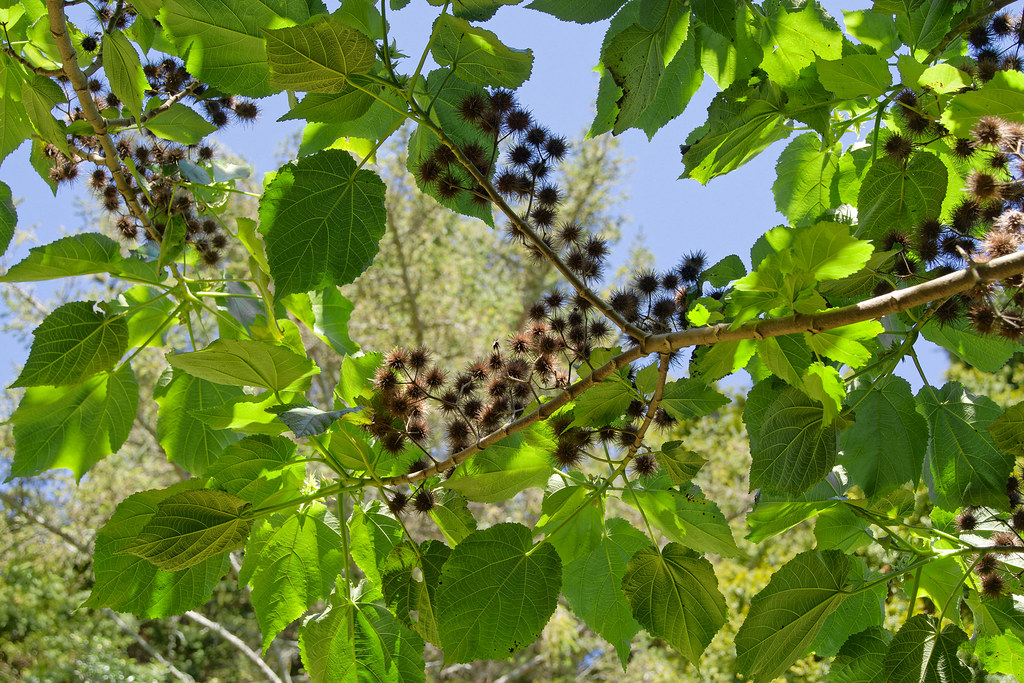
Whau (Entelea arborescens) is a distinctive, fast-growing native shrub or small tree with a soft, spreading form and exceptionally large, heart-shaped leaves. It usually grows to around 6 metres tall, although mature plants can occasionally grow taller in favourable conditions. Its leaves can reach 30 centimetres or more across and are covered in fine hairs, giving the tree a lush, almost tropical appearance. Whau produces clusters of white flowers with prominent yellow stamens, followed by round, brown seed capsules covered in stiff bristles. Its pale wood is exceptionally light and soft, making whau one of New Zealand's most unusual native trees.
Habitat
Whau is endemic to New Zealand and occurs naturally in warmer parts of the North Island and on several offshore islands. It is primarily a coastal and lowland species, growing in coastal forest, shrubland, forest margins, cliffs, rocky places and disturbed sites. Whau prefers relatively warm, sheltered environments and is particularly characteristic of northern coastal vegetation. As a fast-growing pioneer species, it can establish rapidly where disturbance has created open, sunny conditions.
Cultural Importance
Whau has a long history of use by Māori, particularly because of its remarkably light wood. The buoyant timber was traditionally used to make floats for fishing nets and other fishing equipment. Pieces of whau wood could also be used to help support fishing lines and nets in the water. The tree's practical importance was closely connected to coastal life and fishing, reflecting both its natural distribution and the unusual properties of its timber.
Ecological Role
Whau is a fast-growing pioneer species that can help establish vegetation in open and disturbed coastal environments. Its rapid growth creates shade and shelter that can improve conditions for other native plants to establish beneath and around it. The large leaves contribute substantial organic material to the forest floor as they fall and decompose. Its flowers attract insects, while the dense foliage provides shelter and foraging habitat for invertebrates and birds. By quickly occupying disturbed areas, whau can contribute to the early stages of native forest regeneration.
Associated Birds
Tūī: Tūī are active native honeyeaters that feed on nectar, fruit and insects. They may visit flowering whau while moving between seasonal food sources and can also forage among its large leaves and branches for insects. Whau growing within diverse coastal forest contributes to the mixture of flowering vegetation and habitat used by tūī.
Korimako/Bellbird: Korimako feed on nectar, fruit and invertebrates and move between flowering native plants as seasonal resources become available. The flowers and insect life associated with whau can contribute to the range of food resources available within coastal forest and regenerating vegetation.
Tauhou/Silvereye: Tauhou are small, adaptable birds that feed on nectar, fruit and insects. They can forage among the large leaves and branches of whau for small invertebrates and may investigate its flowers when feeding through mixed native vegetation.
Conservation Status
Whau is classified as At Risk – Declining in New Zealand. Although it can grow rapidly where suitable habitat remains, natural populations are affected by browsing from introduced animals, habitat modification and competition from invasive plants. Its relatively short lifespan and dependence on successful regeneration mean maintaining suitable coastal and lowland habitats is important for sustaining wild populations.
Interesting Facts
- Whau is endemic to New Zealand, meaning it occurs naturally nowhere else in the world.
- Its wood is extremely light and has a density comparable to some of the world's lightest timbers.
- Māori traditionally used the buoyant wood to make floats for fishing nets.
- Whau has enormous heart-shaped leaves that can reach 30 centimetres or more across.
- The tree is fast growing but relatively short lived compared with many of New Zealand's larger native forest trees.
- Its fruit is a distinctive bristly capsule containing numerous small seeds.
- Whau is an early-successional or pioneer species and can quickly colonise open or disturbed sites.
- The Māori name whau also appears in place names, including Whau River in Tāmaki Makaurau/Auckland.
Conservation Tips
Protecting coastal forests, cliffs, shrublands and regenerating native vegetation is important for maintaining natural populations of whau. Controlling introduced browsing animals and invasive weeds can greatly improve the survival of seedlings and young plants. Whau is also valuable in ecological restoration within its natural range because its rapid growth can quickly provide shelter and shade, helping create conditions in which other native forest species can establish.
Growing conditions
Sun
Moisture
Soil
Drainage
Frost tolerance
Wind tolerance
Coastal tolerance
What this tree gives back

Food for native birds
Fruit, seeds or nectar that feed native birds.
Supports pollinators
Flowers that sustain native bees and insects.
Erosion control
Roots that bind soil and hold slopes together.
Suits riparian planting
Thrives along stream and river margins.

Suits wetland planting
Handles the wet ground of wetland sites.
More native trees
Explore other species

Ready to plant natives?
Assess your land and discover the right planting approach for your forest.